
Laie Beach Park
Your backyard isn't a park. It's a beach.
A long stretch of white sand that tourists haven't discovered. Morning swims before 8am, calm protected water, no crowds. This is why people who move to Laie don't leave.
Five questions. An honest answer. The guide that tells you what most others won't — including whether the commute will ruin it, and what the real estate market actually looks like.
Numbers that actually matter when you're deciding whether to buy, rent, or move to Laie — not the chamber of commerce version.
Laie runs tight. Inventory stays low because people who buy here tend not to sell. When something hits the market at fair value, it moves in days — often before it appears on Zillow.
The question you must answer first: Is the property fee simple or leasehold? Some Laie properties sit on Church-owned land under long-term leasehold agreements. Leasehold properties list 20–35% lower than comparable fee simple — but that discount disappears when it's time to finance or resell.
3–4 bedroom homes on standard lots. Oceanfront and larger lots push to $1.5M+.
Pre-approval and a local agent with community connections are non-negotiable. Most good buys close before a public listing.
Windward Oahu has outperformed Honolulu proper over the past decade on a percent basis.
Ask specifically. Don't assume. This changes everything about financing, resale value, and long-term wealth building.
On a $900K home: approximately $4,500–$5,400/year. Investment property rate is higher than owner-occupied.
We have a relationship with a Laie-based real estate agent who knows this community — not a generalist covering all of Oahu. Tell us what you're looking for.
One direct response. No mass calls. No spam.
A long stretch of white sand that tourists haven't discovered. Morning swims before 8am, calm protected water, no crowds. This is why people who move to Laie don't leave.
If you're considering the windward coast or North Shore, here's how the key factors compare across four realistic alternatives.
| Factor | Laie | Kailua | Kaneohe | Haleiwa |
|---|---|---|---|---|
| Median home price | $850K–$1.1M | $1.1M–$1.4M | $800K–$1.1M | $800K–$1.1M |
| Average 3BR rent | ~$3,200/mo | ~$3,800/mo | ~$3,000/mo | ~$3,200/mo |
| Commute to Honolulu | 40–50 min | 25–35 min | 20–30 min | 40–50 min |
| Community character | Very tight-knit | Good, suburban | Good, suburban | Eclectic, surf |
| Urban amenities | Very limited | Excellent | Moderate | Moderate |
| Beach quality | Good, uncrowded | Excellent (Kailua Beach) | Bay (not ocean) | North Shore surf |
| Safety rating | Very high | High | High | Moderate |
| School district | Kahuku High | Kailua High | Castle High | Kahuku High |
| Dining options | Very limited | Many | Moderate | Growing |
| Best for | Family, community, remote work | Professional families, beach lovers | Commuters, suburban families | Surfers, outdoor lifestyle |
An honest inventory — for people who need to know before they commit, not people who want to be sold on the place.
The primary grocery store. Adequate for essentials and daily needs. Most residents supplement with weekly Kaneohe or Kailua runs for better produce selection, Costco, and specialty items. Local produce section is often stocked from community growers and worth checking first.
One of Hawaii's highest-attended paid attractions — and one of the few that earns it. Performers are actual Pacific Islanders trained in their own traditions. The evening show is genuinely spectacular. Employs hundreds of local residents and BYU-Hawaii students. Gives the community a cultural depth most small towns don't have.
3,000+ students from 70+ countries. International faculty. Strong cultural programming. Campus library open to the community. The cafeteria is public, well-operated, and one of the better dining options in Laie. The university is inseparable from the town's character — that's a feature, not a footnote.
Kahuku High School serves Laie and surrounding communities with a strong athletics tradition (football especially). The complex includes Hauula Elementary, Laie Elementary, and Kahuku Elementary. Community involvement is high — parents show up. For private school options, the closest are in Kaneohe (30 minutes).
Laie is not a restaurant town. The authentic spots — Filipino family restaurants, local plate lunch, Polynesian food at the PCC — are genuine and worth knowing. For more variety, Hauula and Kahuku are 5–10 minutes away. Serious restaurant evenings mean driving to Kailua or Kaneohe. This is the trade-off most families adapt to within a month.
Limited local options — a small clinic and pharmacy cover basics. Castle Medical Center in Kailua is the nearest hospital, approximately 25 minutes. For specialists and emergency care, plan for the drive. This is the most significant practical trade-off for families with medical complexity or young children with frequent healthcare needs.
Turtle Bay Resort (10 minutes north) has two championship golf courses. The Laie Community Park has tennis courts, a basketball court, and open green space. The Ko'olau Golf Course is 20 minutes in Kaneohe. The community maintains parks well — a direct reflection of the community's civic investment.
A car is essential in Laie. There is no meaningful public transit to Honolulu that's practical for daily use. The H-3 freeway is the primary commute route. Rideshare is available but expensive for the distance. Residents who work remotely (or hybrid 1–2 days/week) overwhelmingly report that the commute stops being a factor after the first year.
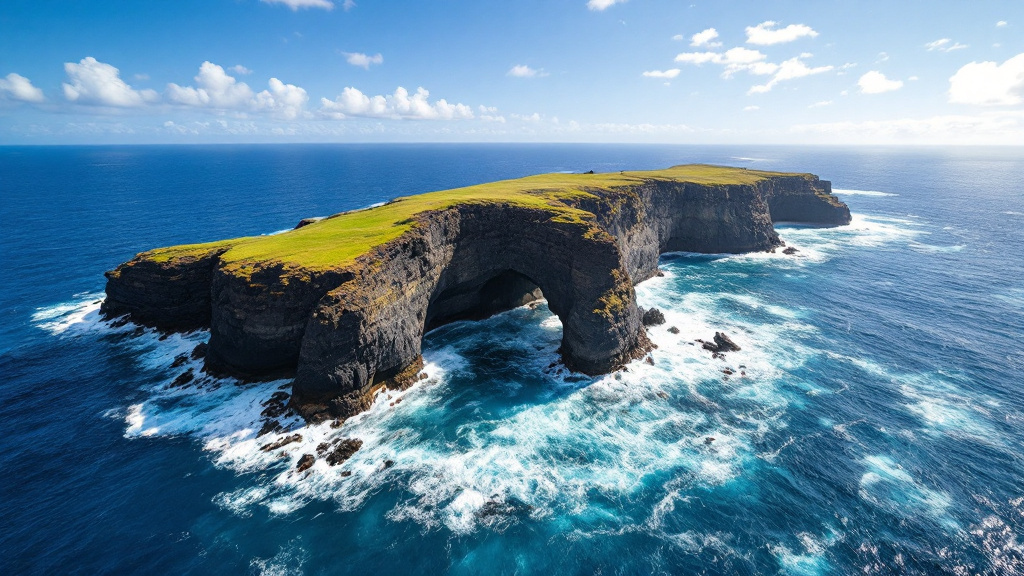
A rocky peninsula, a sea arch cut by centuries of waves, and open Pacific as far as you can see. Most visitors drive past it. Residents walk there.
People who move to Laie almost always say the same thing at six months: "I didn't expect to love it this much." The ones who struggle usually missed something specific going in.
This isn't "aloha spirit" as a marketing phrase. Neighbors show up when you're moving. People bring food when you're sick. The community's civic infrastructure — built over generations — is the kind most suburban neighborhoods have quietly lost.
Low crime in Laie is a consequence of community cohesion. When people know each other and look out for each other, crime doesn't find the foothold it finds in anonymous suburbs. Kids in Laie have outdoor freedom that's become genuinely rare.
The commute is the most common objection to Laie. Remote work dissolves it. If you work from home three or more days a week, Laie's lifestyle advantages start dominating the calculus — and most people who've done the math agree.
BYU-Hawaii, the Polynesian Cultural Center, and the community's Pacific identity create cultural programming most small American towns would envy. For families with children, this is an education that happens outside classrooms.
Hukilau covers the basics. Most households run a weekly Kaneohe or Kailua supply run. Costco trips are a community ritual. This becomes routine quickly but requires intentional planning that most mainland suburban lifestyles don't.
Good properties often close before they're publicly listed. Have financing in place, know your requirements precisely, and have a local agent with community connections before something you want appears. Speed is not optional in this market.
There are good spots in Laie and nearby Kahuku. But the honest picture is: if Friday night restaurant variety or entertainment options are important to daily quality of life, Laie will frustrate. Kailua is the right answer for that lifestyle.
The university shapes the town's culture — high volunteerism, strong family orientation, low alcohol presence, faith-community events. For many families this is a feature. If it conflicts with your lifestyle, it will grate. Be honest with yourself about this before committing.
The commute is the question everyone asks about Laie. Here are realistic times — not Google Maps in the middle of the night, but actual morning peak hour.
Select your workplace and see realistic commute expectations from central Laie.
The commute calculator gives you a realistic picture, not a best-case scenario. The numbers here include typical H-3 and H-1 peak hour traffic, not empty-road conditions.
Most Laie residents who commute to Honolulu report the biggest factor isn't the distance — it's the predictability. Unlike urban congestion, the H-3 is generally consistent. You know what to expect.
Note: Commute times are estimates based on typical peak-hour traffic patterns. Accidents, construction, and special events can add 15–30 minutes. We recommend personally testing the commute at your actual departure time before committing to a purchase.
Five questions. An honest score. Built to tell you the truth — including whether your lifestyle is compatible with what Laie actually is, not what you want it to be.
New listings, market shifts, and community news — delivered when it matters, not on a schedule. No spam.